Why is your Samsung dishwasher leaving standing water in the bottom of the tub after a cycle finishes? Seeing dirty water sitting in the basin usually means an obstruction is preventing the drain cycle from pushing water into your home plumbing. Before calling a repair technician, you can systematically check the filter, drain hose, disposal connection, and pump impeller to restore proper drainage.
A dishwasher drainage system is the network of filters, hoses, valves, and electric pumps responsible for collecting and expelling used wash water out of the appliance and into your waste line. Consider a scenario where your dishwasher stops pumping at the end of a cycle, leaving murky water in the basin. To fix this, you start with the simplest checks using common household supplies—such as a bucket, sponge, screwdriver, and flashlight—before touching complex components.
Samsung Dishwasher Error Codes 5C and 5E Explained
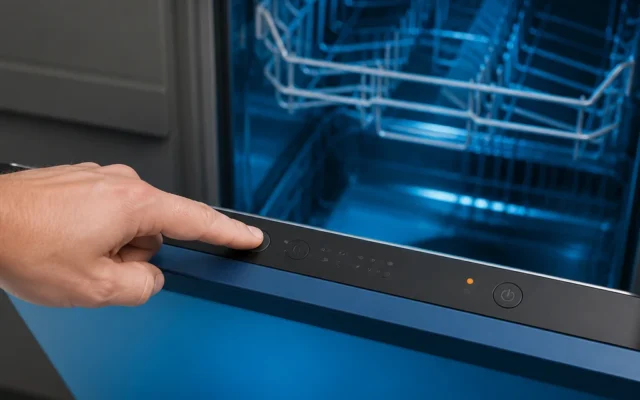
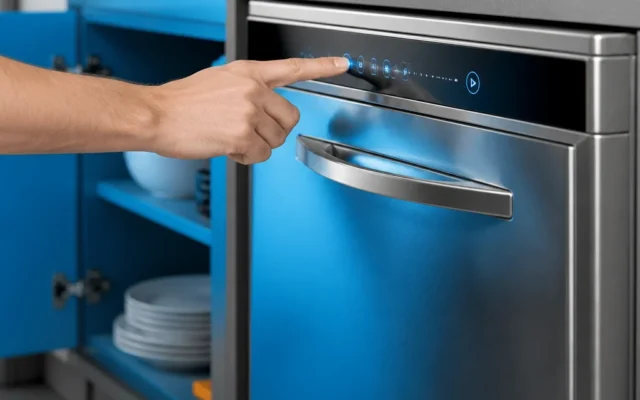
When a Samsung dishwasher detects that water has not drained within its designated system timeframe, it displays an error code on the control panel. Samsung units display code 5C or 5E to indicate a water drainage failure. On model displays with 7-segment digital screens, these exact error codes can appear visually as SC or SE.
These drainage codes occur when wash water cannot clear the basin. Common causes include a clogged filter assembly, foreign debris lodged inside the drain pump impeller, or a drain hose that has become pinched, kinked, or frozen.
Common Causes of Standing Water in a Dishwasher Tub
Standing water in the tub typically indicates a restriction along the flow path or a failure in the drain system between the sump pit and your household plumbing drain. Accumulated food waste in the fine mesh sump filter restricts water flow into the drain housing, triggering drain errors and preventing complete evacuation.
When setting up the drainage pathway, you generally choose between an air gap and a high loop installation under your sink cabinet. An air gap sits mounted above the sink counter, whereas a high loop fastens the drain hose directly to the underside of the kitchen counter above the drain entry point. Samsung requires the dishwasher drain hose to be routed through an air gap or elevated in a high loop above the sink cabinet drain connection point to prevent dirty sink water from backflowing into the dishwasher tub.
How to Clean the Dishwasher Tub Filter Assembly
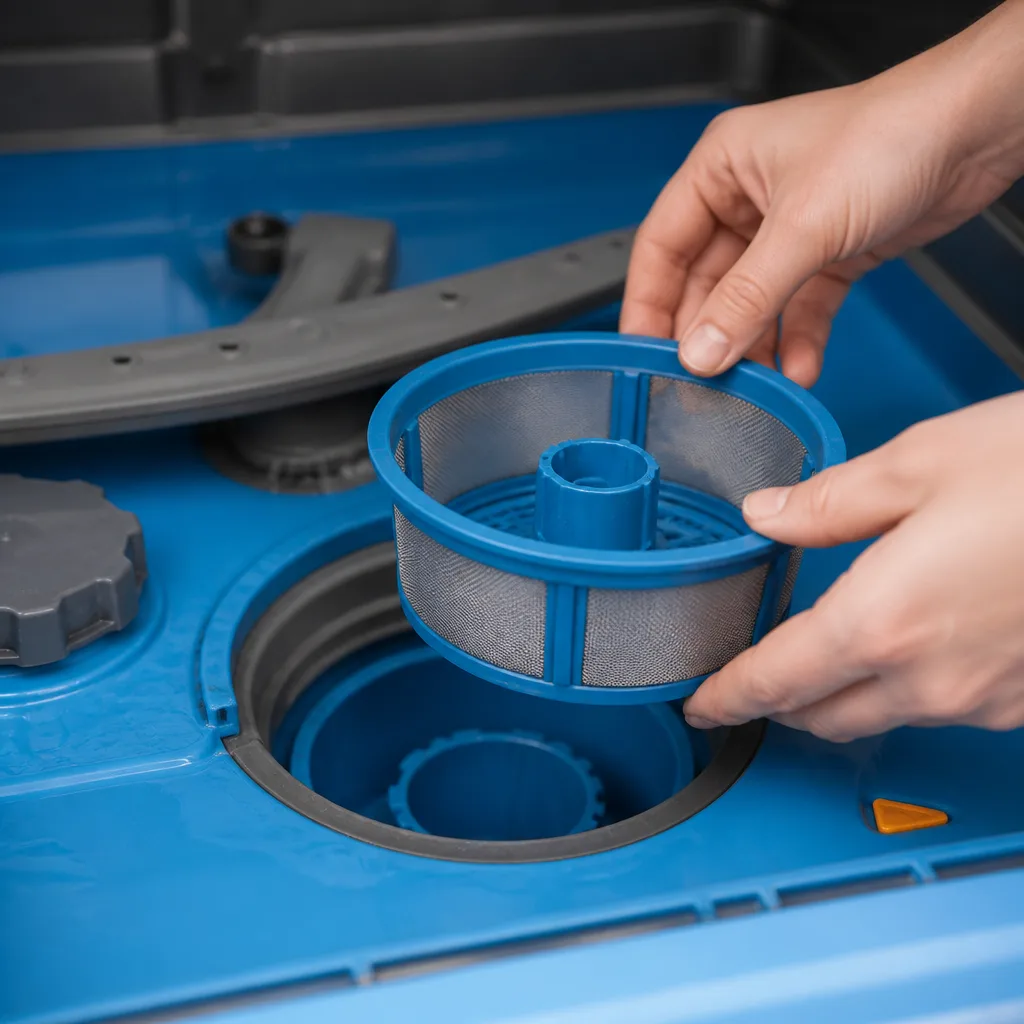
A clogged filter directly leads to poor drainage. Clearing food debris restores suction and allows water to enter the drain pump freely.
Info: Safety First
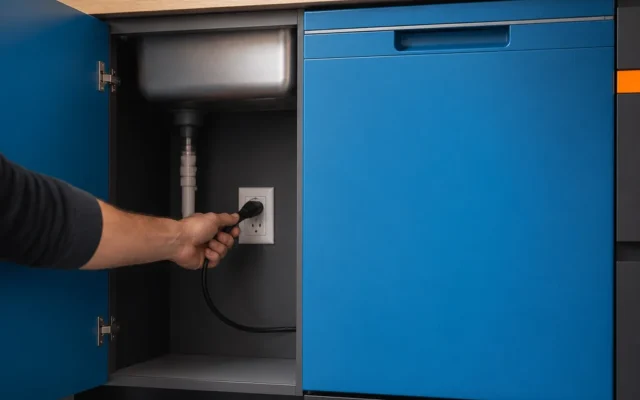
Always turn off power to the dishwasher at the circuit breaker or unplug the appliance before reaching into the sump basin.
- Pull out the lower dish rack to expose the bottom of the dishwasher basin.
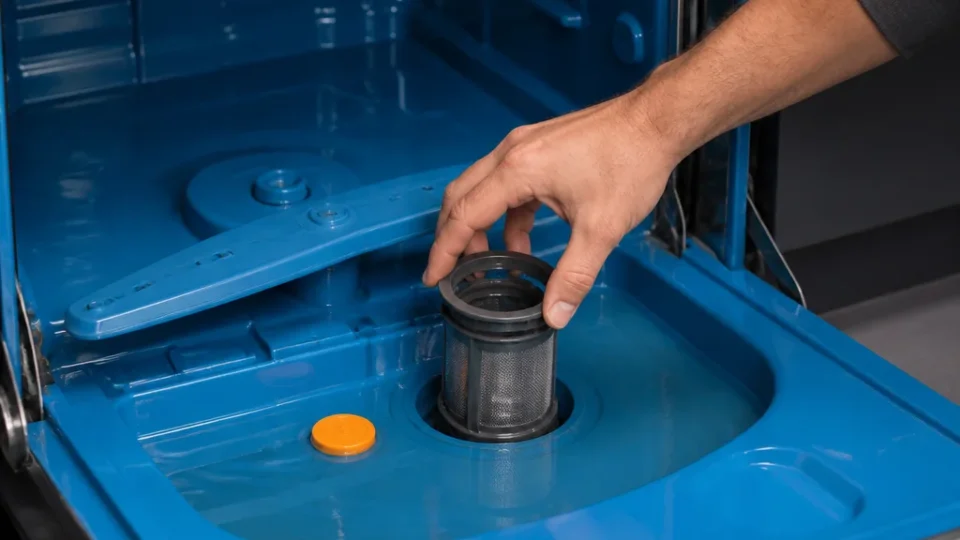
- Locate the circular fine mesh filter assembly in the center of the sump pit.
- Twist the filter counterclockwise and pull it straight up to lift it out.
- Rinse the mesh filter under warm running water, gently brushing away trapped grease and food particles.
- Reinsert the filter assembly into the sump pit and turn it clockwise until it locks firmly into position.
How to Inspect and Unclog the Drain Hose
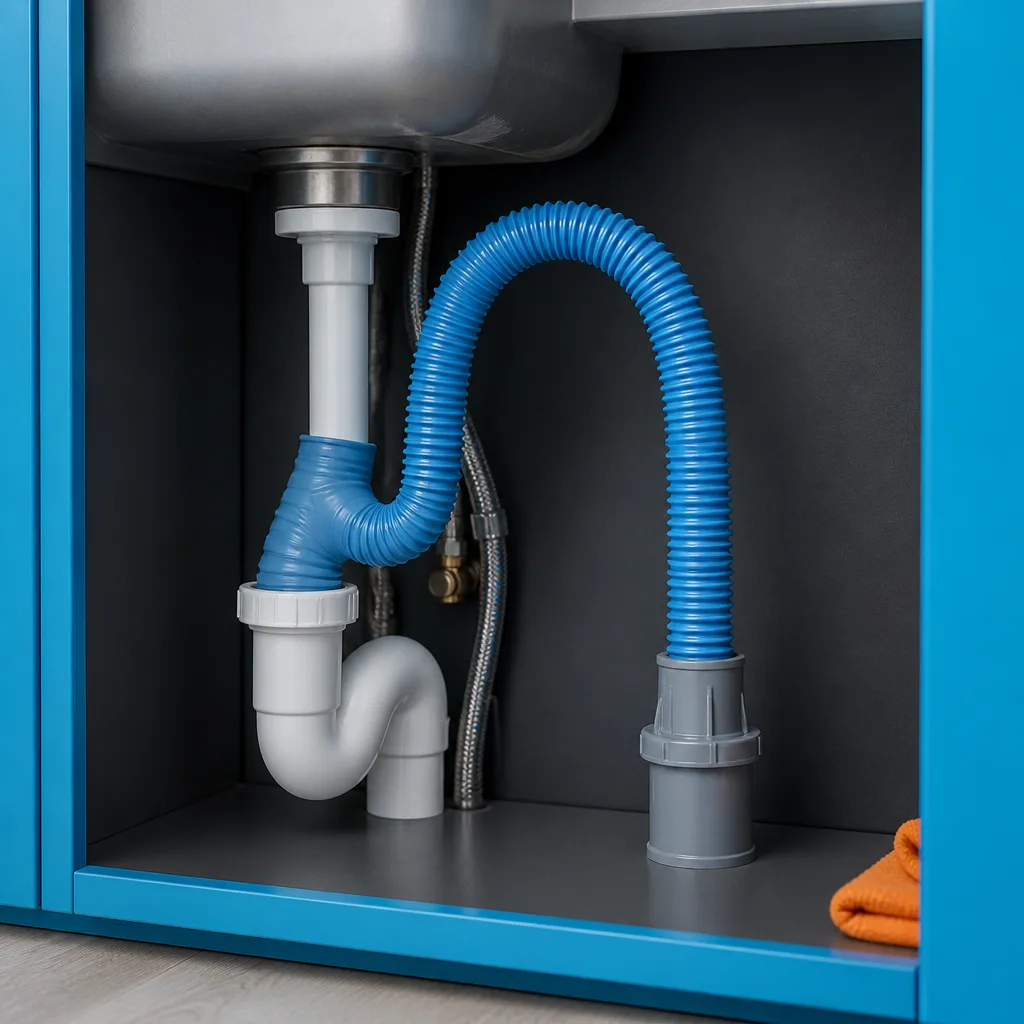
If the filter is clean but standing water remains, inspect the flexible drain hose beneath your kitchen sink cabinet. Look along the entire length of the hose for sharp bends, crushed sections, or heavy debris accumulation that restricts water movement.
If you have ever diagnosed drainage issues on a Samsung washing machine, you know that a kinked hose completely shuts off the flow of wastewater regardless of pump power. Straighten any twisted sections, verify that the hose maintains its high loop or air gap connection, and clear any internal blockages.
How to Check the Garbage Disposal Connection and Knockout Plug
If your dishwasher is newly installed or connected to a recently replaced garbage disposal, the connection port itself may be blocked. Garbage disposals are manufactured with a plastic knockout plug molded inside the lateral dishwasher inlet nipple to maintain a watertight seal prior to dishwasher connection, as detailed by appliancepartspros.com.
Failing to knock out and remove the plastic drain port knockout plug inside the disposal inlet will completely block water flow and prevent the dishwasher from draining, according to dialappliance.com. You can verify whether the plug was removed without disconnecting the plumbing. Inserting a blunt tool into the disposal inlet port and stopping after 1/2 inch to 1 inch indicates the knockout plug is intact, whereas passing smoothly roughly 3 inches indicates it has been removed, according to technical guidance at producthelp.whirlpool.com. If intact, knock out the plug with a screwdriver and hammer, then retrieve the plastic disk from inside the disposal chamber.
How to Access and Unjam the Drain Pump Impeller
Foreign debris, such as glass fragments or broken dishware, can jam the drain pump impeller and stop the motor from spinning. Clearing the pump housing allows the mechanical components to turn freely.
Warning: Sharp Debris Hazard
Broken glass fragments often collect inside the pump basin. Use caution and wear protective gloves or use needle-nose pliers when clearing the impeller.
- Disconnect power to the dishwasher at the main circuit breaker.
- Bail standing water out of the bottom tub using a small cup and sponge until the sump area is accessible.
- Remove the filter assembly and take off the drain pump cover located inside the bottom basin.
- Inspect the impeller fan blades using a flashlight to spot lodged objects or glass shards.
- Carefully pick out foreign debris and spin the impeller by hand to confirm it rotates freely.
- Reattach the pump cover, reinstall the filter, restore power, and run a short test cycle.
When to Call an Appliance Repair Technician
While clearing physical clogs is straightforward, mechanical or electrical pump failures require specialized tools. If the drain pump motor hums continuously without moving water, fails to run entirely after clearing all blockages, or exhibits electrical shorting, the pump assembly itself may need replacement.
If clearing the filter, drain hose, and pump impeller does not restore proper drainage, check your product manual for warranty coverage or contact a certified technician to inspect the electrical pump assembly.
How do you manually drain standing water from a Samsung dishwasher?
To manually drain standing water, disconnect power to the unit and use a cup to scoop excess water into a bucket. Sopping up the remaining water with a towel or sponge exposes the sump filter so you can clear obstructions safely.
Can a clogged sink drain cause a Samsung dishwasher to not drain?
Yes. Because your dishwasher drain hose feeds directly into your sink drain or garbage disposal, a blockage inside your home sink plumbing blocks wastewater from exiting, forcing water to stay inside the dishwasher tub.