Adding 0.25 cups of baking soda to boiling water breaks down heavy grease deposits trapped inside metal microwave exhaust screens.
Types of microwave filters and how they work
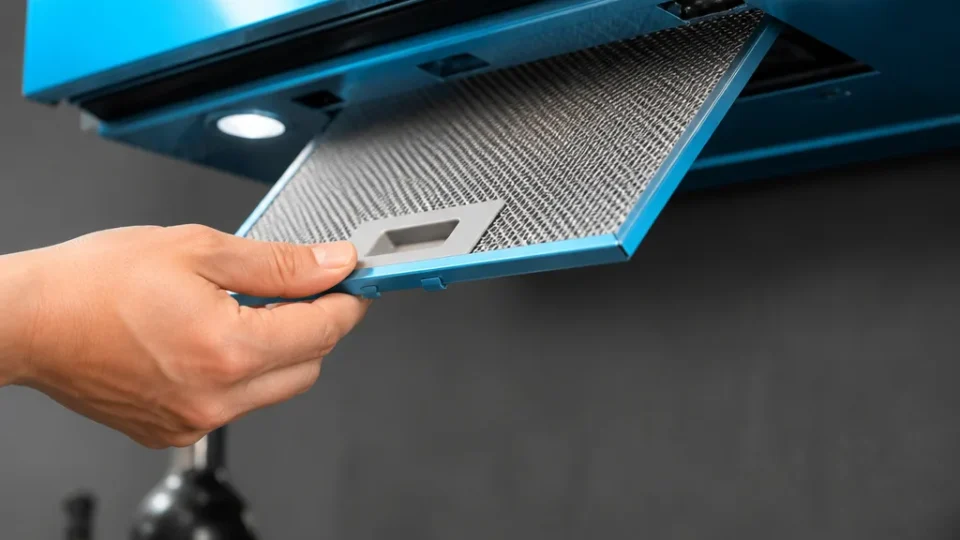
A microwave grease filter is an aluminum mesh screen positioned on the underside of an over-the-range unit to trap airborne fat and oil particles before exhaust air enters the ventilation duct.
Over-the-range microwaves use two distinct filter types depending on your home setup. An aluminum mesh filter traps airborne grease splatters directly above the cooktop, while a charcoal filter sits behind the top vent grille to absorb odors when your microwave recirculates air back into the kitchen. While aluminum mesh filters are washable and reusable, charcoal filters rely on active carbon pads that degrade when wet and must be replaced instead of cleaned.
According to JennAir, grease filters collect heavy cooking vapor, whereas charcoal filters are dedicated to trapping persistent smoke and food smells in non-vented configurations.
Tools and supplies needed for cleaning
Gathering the proper supplies before starting ensures you can dissolve thick oil without scratching the metal frame.
- Liquid grease-cutting dish soap
- Baking soda (0.25 cups per bath)
- Boiling or very hot tap water
- Soft nylon bristle brush
- Microfiber drying towel
How to remove and degrease a microwave mesh filter
Proper ventilation maintenance keeps your hood fan quiet and prevents grease drippings onto your cooktop. Following a clear step-by-step microwave filter guide protects the thin aluminum layers from denting or warping during handling.
Removing the grease filter safely
Before touching the underside filter frame, verify that the cooktop burner surface is cold and turn off the microwave light and exhaust fan to prevent burn hazards or electrical contact.
- Locate the metal ring tab or spring latch on the outer edge of the aluminum filter frame. When correctly positioned, your fingers can press directly against the spring tension without touching the cooktop surface.
- Push the tab backward toward the rear clip and swing the front edge downward to disengage the filter from the mounting slot. When successful, the front edge drops free smoothly; if it binds, press firmly against the spring clip rather than prying with a screwdriver, which will bend the soft metal boundary.
Soaking and scrubbing accumulated grease
Fill a deep sink basin or heat-safe baking pan with hot or boiling water, then mix in a generous squirt of liquid dish soap and 0.25 cups of baking soda, following care guidelines provided by Whirlpool and Maytag.
- Submerge the mesh filter completely into the bath. As a configurable option, using hot tap water allows for a gentler soak, whereas using boiling water softens hardened oil more rapidly at the cost of faster heat loss in the sink basin.
- Scrub the aluminum mesh gently using a soft nylon bristle brush until the yellow film dissolves. When clean, the metal mesh shines clear with open airflow pathways; if grease remains stuck between internal wire layers, submerge the filter for a second hot soak rather than scrubbing with steel wool.
While hot baking soda baths loosen sticky residue, this cleaning method cannot remove grease built up inside the internal blower housing, and prolonged soaking carries a residual risk of mild surface oxidation on bare aluminum.
Rinsing, drying, and reinstalling the filter
Rinse the filter thoroughly under hot running water until all soap suds and alkaline baking soda traces disappear.
- Shake the aluminum frame gently over the sink to remove trapped water droplets, then place it vertically on a clean microfiber drying towel until completely dry. WARNING: Never reinstall a wet filter; moisture entering the housing creates a severe electrical shock hazard and risk of short circuiting internal electrical components or fan wiring.
- Slide the rear filter tabs into the back housing slots, depress the spring latch, and push the front edge upward into the housing. When properly seated, the filter rests flush inside the frame and does not rattle when the exhaust fan runs.
When to replace a charcoal filter instead of cleaning it
Unlike metal mesh, charcoal filters cannot survive liquid cleaning. Official guidance from Samsung Support states that charcoal filters cannot be cleaned and reused and must be replaced with a new part. Submerging activated carbon breaks down the internal matrix, causing the charcoal material to clump and lose its ability to absorb cooking odors.
According to JennAir technical documentation, grease filters should be cleaned monthly or whenever your appliance filter indicator prompts service. Charcoal filters, by contrast, require full replacement every 6 to 12 months depending on how frequently you fry or sear foods on the stovetop.
Common microwave filter cleaning mistakes to avoid
Avoid putting aluminum mesh filters through high-heat dishwasher cycles with harsh detergents, which can dull the metallic finish or warp delicate mesh layers. Never use oven cleaner, bleach, or wire scouring pads that strip protective coatings from aluminum. Finally, never operate your microwave hood fan without a clean grease filter installed, as loose oil vapors will coat the blower motor and ductwork, creating a fire hazard over time.
If your over-the-range microwave exhibits poor ventilation airflow or persistent burning smells even after cleaning the filter, consult the manufacturer manual or request professional service to inspect the exhaust fan blower.
Can you put a microwave grease filter in the dishwasher?
Some metal mesh grease filters are dishwasher-safe on a light cycle, but harsh dishwasher detergents and high heat can discolor aluminum or bend the frame. Soaking in hot water with grease-cutting dish soap and baking soda is safer and more effective for heavy buildup.
Why does my microwave filter still feel greasy after washing?
Baked-on cooking oils harden into a sticky layer. If a standard soap soak does not dissolve it, prolong the soak time in boiling water mixed with baking soda and concentrated liquid dish soap before scrubbing gently with a soft nylon brush.
What happens if you submerge a charcoal microwave filter in water?
Submerging a charcoal filter destroys the activated carbon inner pad, causing it to clump and lose its odor-absorbing capabilities. Charcoal filters are not washable and must be discarded and replaced when saturated.
Last reviewed: 2026-08-26 (revisions: 2)