You can clean the housing, the seals and the dispenser lines. You cannot clean the cartridge itself. Standard disposable refrigerator water filters cannot be cleaned or rejuvenated via vinegar soaking and must be replaced at regular intervals, so everything useful in this job happens around the cartridge rather than to it.
Can you clean a disposable refrigerator water filter
A refrigerator water filter is a sealed cartridge of activated carbon that traps taste, odor and sediment as water passes through it on its way to the water dispenser and the ice maker. The carbon works by holding what it captures, which is why a filter reaches its end by filling up rather than by getting dirty on the outside. Soaking it does not empty it, and it can push trapped material back into the media.
So when you look up how to clean a refrigerator water filter, the honest answer covers every part of the system except the cartridge.
Disposable cartridge versus reusable mesh screen
These are not the same part and they do not get the same treatment. A disposable filter cartridge is sealed, carbon-filled and meant to be swapped out, while a reusable surface mesh screen is a strainer that catches grit before it reaches the valve, and rinsing it under clean warm water is exactly what it is built for. If you can see through it, it is a screen. If it is a sealed plastic can with a twist collar, it is a cartridge, and washing it is not on the menu.
Refrigerator water filter maintenance vs replacement overview
Here is which part of the water filtration system gets serviced, which gets replaced, and what skipping either one looks like.
| Component | Recommended action | Service interval | Risk of improper maintenance |
|---|---|---|---|
| Disposable carbon filter cartridge | Replace with a new OEM or compatible cartridge | The interval in your model’s manual, typically about every 6 months or after a set volume of water | Clogged media, degraded taste, bacterial buildup |
| Filter housing socket and O-rings | Wipe the manifold clean and check the rubber seals | At every filter change | Leaks, mold in the manifold, a seal that binds |
| Dispenser water lines | Flush water through the dispenser until the stream runs steady and clear | After every filter installation | Air bubbles, a noisy dispenser, loose carbon fines in the glass |
| Reusable surface mesh screen | Rinse the screen under clean warm water | The interval in your model’s manual | Restricted water supply to the ice maker |
Tools and safety prep before servicing the filter housing
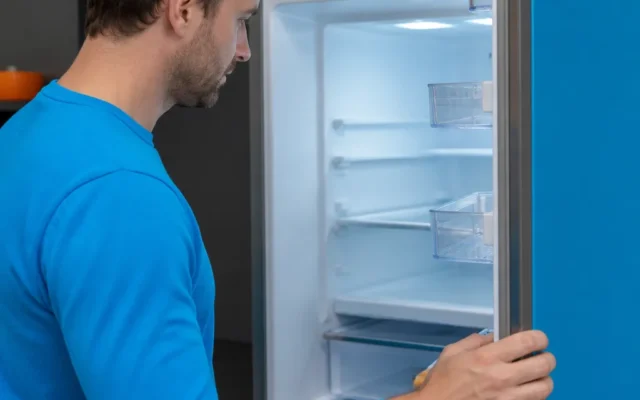
You need less than the job sounds like: a towel, a shallow pan, a clean microfiber cloth, and a pitcher big enough to catch a long pour. Nothing here calls for a tool that cuts or pries. Have the replacement cartridge in hand before you start, because the refrigerator is out of service until one is seated, or until the bypass plug your model may include is fitted.
- Turn off the household water supply to the refrigerator at its shut-off valve.
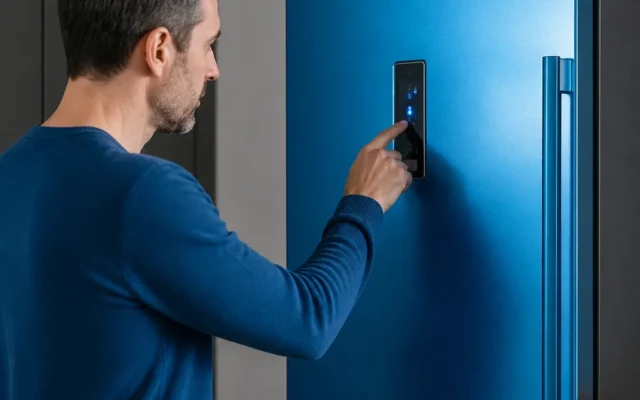
- Switch the ice maker off so it does not call for water in the middle of the job.
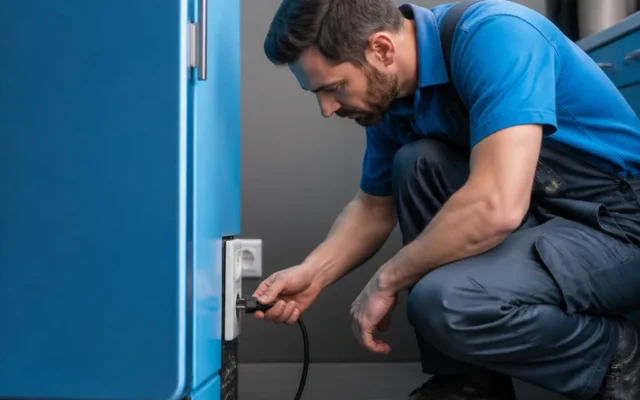
- Unplug the refrigerator, or cut power at the breaker if the plug is unreachable.
- Twist out the old filter cartridge and let it drain into the pan.
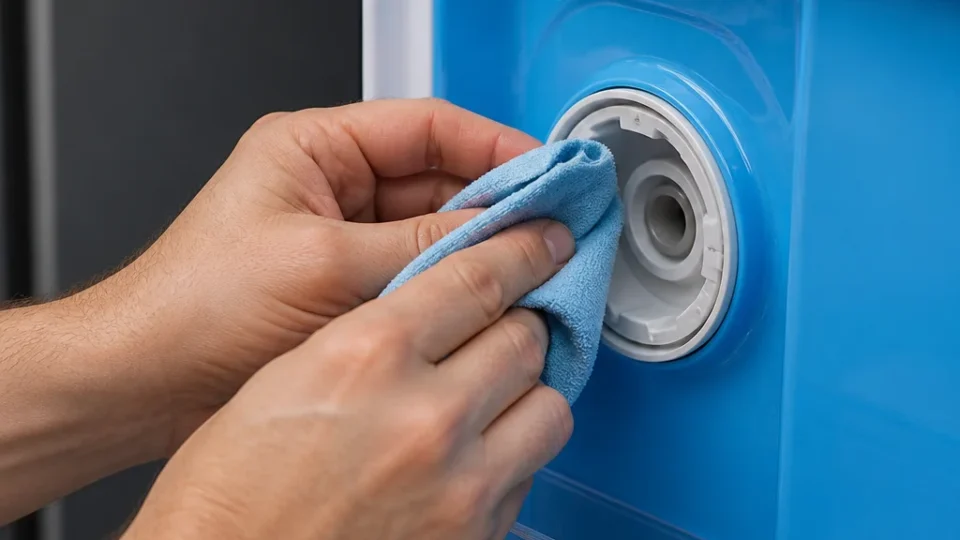
- Wipe the housing socket and check the O-rings before the new cartridge goes in.
- Seat the new cartridge, restore water and power, then flush the lines before you drink or make ice.
Shut off the water and the ice maker first
The two steps matter for different reasons. The shut-off valve keeps the supply line from emptying into your kitchen while the housing is open, and switching off the ice maker keeps it from placing a call for water that the system cannot fill. Neither step is optional on a plumbed refrigerator, and neither takes longer than finding the valve.
Cleaning the refrigerator water filter housing and seals
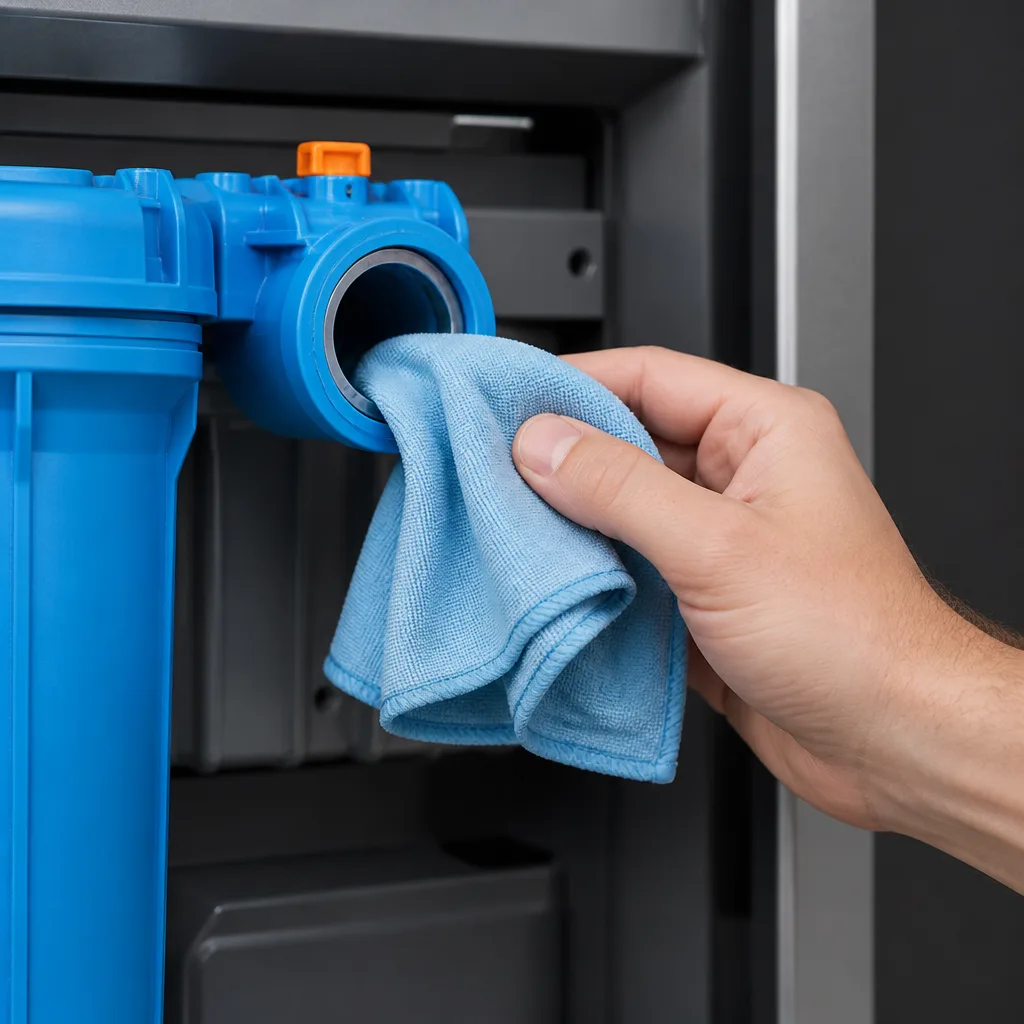
With the cartridge out, the socket it sat in is the part you can genuinely clean. Wipe the manifold and the inside of the socket with a clean, damp microfiber cloth, work around the collar where sediment collects, and dry it before anything goes back in. Look for a dark film or a musty smell, since a manifold that holds moisture between filter changes is where mold gets its start. What this cannot reach is the tubing behind the manifold, so wiping the socket cleans the part you can see and leaves the run of line to the flush.
Inspect the O-rings before the new cartridge goes in
The rubber seals are the difference between a filter change and a slow leak you find weeks later. Run a finger around each O-ring and look for flat spots, nicks, dryness, or a ring that has rolled out of its groove. A seal that binds as you twist the cartridge home is telling you it is dry or damaged, not that it needs more force. Replace the ring if your model sells one separately, and do not grease it with anything that is not rated for drinking water.
Flushing the refrigerator water dispenser system
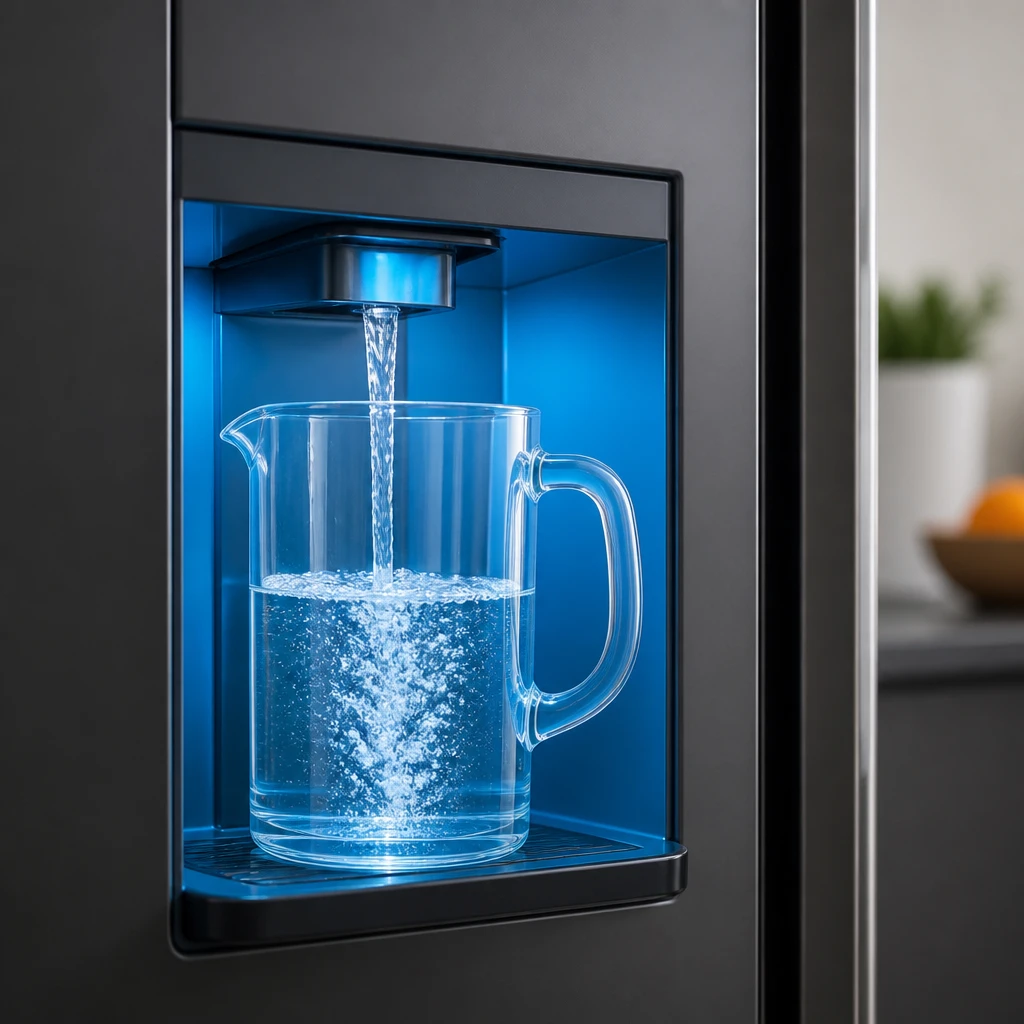
Flushing the refrigerator water system after filter replacement or maintenance removes trapped air and loose carbon fines from the lines. Put the pitcher under the water dispenser, run water in stretches, empty the pitcher and keep going until the stream is steady and clear rather than sputtering and grey. How much water that takes varies by model, so follow the volume in your manual and let the water itself confirm it. Discard the first batches of ice the ice maker produces afterward, for the same reason.
Why flushing beats soaking
Soaking treats the cartridge as though it were dirty on the outside. Flushing treats the system as though it has air and carbon dust in it, which after a filter change it does, and only one of those matches what actually happened when you opened the housing. A flush cannot revive a cartridge that is spent, so if the water still tastes off once the system runs clear, the age of the cartridge is the next thing to check.
Troubleshooting slow water flow or bad taste after maintenance
Slow flow straight after a change usually means air is still in the line or the cartridge is not fully seated, so pull it, re-seat it firmly and flush again. Water that runs cloudy or grey is normally carbon fines, and it clears with more flushing. A taste that survives a full flush points at the cartridge rather than the plumbing, and a drip at the collar points at the O-rings.
Refrigerator water filter replacement schedules typically range from every 6 months or after dispensing a specific volume of water, varying by specific model. Your manual sets yours.
When to call an authorized service technician
If your refrigerator water dispenser continues to leak or shows minimal water flow after replacing the filter and flushing the line, contact an authorized service technician to inspect your household water supply valve and water inlet valve. Those are pressurized parts behind the appliance, and testing them is not a cloth-and-pitcher job.
Frequently asked questions
Does soaking a refrigerator water filter in vinegar work?
No. Standard disposable refrigerator water filters cannot be cleaned or rejuvenated via vinegar soaking and must be replaced at regular intervals. A soak acts on the porous carbon matrix inside a sealed cartridge rather than on any surface dirt, and it can leave a sour taste or chemical residue in your drinking water. Clean the housing and flush the lines instead.
How often should you replace or service a refrigerator water filter?
Refrigerator water filter replacement schedules typically range from every 6 months or after dispensing a specific volume of water, varying by specific model, so the interval printed in your manual is the one to follow. The housing socket and its O-rings are serviced at every filter change rather than on a schedule of their own.
What happens if you do not flush a new or reinstalled water filter?
The cartridge holds trapped air and loose carbon fines, and both reach the glass. That shows up as a sputtering dispenser stream, cloudy or greyish water, and weaker flow than the filter is capable of. Flushing removes the air and the fines from the lines, which is why it belongs at the end of every filter change rather than as an optional extra.
Cleaning a refrigerator water filter means cleaning everything around the cartridge — the socket, the seals and the water filtration system’s lines — and replacing the cartridge on the schedule your model gives. The one job not worth your time is washing the part that was designed to be thrown away.